} -->

Sunday, 8 May 2016

No Stress NAPLAN Testing

The most important thing during NAPLAN is to to make the students understand that NAPLAN is 4 tests that you do your best in but they are not something to stress over. I explain the format of NAPLAN, that no one is expected to get 100% on it. That it has questions from year levels above theirs. I also tell them that not even I usually get 100% on the test. I tell the students that doing their best will make me proud and that is something they should strive for.

 By carefully preparing my students for NAPLAN I have never had any tears or comments of 'I can't do this'. In a split 2/3 class I even had a year 2 student beg me to let them do the test!


Test Strategies

Introduce strategies to students help students cope with the test. 
For younger students introduce strategies as a memorable character (see below for suggested names).
Dead Fred- Did not die from a test
Whinging Whinnie - negative character- gets upset about tests
Careful Cara - Reads the questions carefully by looking for key words
Naughty Nick -Places a silly (obviously wrong) answer in each question
Sneaky Sarah - Places two similar answers in each question to try and trick you
Guessing George - Makes guesses only when necessary and eliminates first
Recheck Rebecca -Rechecks her answers at the end


Purchase these posters on Design by Teachers.

Good luck to all students and teachers!

Monday, 2 May 2016

10 Ways to get More out of NAPLAN Week


NAPLAN is an unfortunate part of the education system in Australia. Don't let NAPLAN interrupt a whole week of learning, here is 10 ways to get more out of NAPLAN week this year!


1) Teach testing strategies to impact future (more important) tests. Students need to learn tricks such as eliminating incorrect answers, reading the questions carefully and checking their work. Click here to learn more about how I teach these strategies to students.

2) As the NAPLAN tests don't really matter you can help to promote a fearless attitude towards tests. A student who doesn't stress about the NAPLAN tests will be less likely to stress about HSC/TEE or university exams. Last year I had a split grade 2/3 class and I had a year 2 student BEG me to sit NAPLAN. He had no fear towards the test as I had taught my students to see the fun in it!

3) Use NAPLAN as a springboard for writing activities like writing a letter to the next years group of year 3/5s telling them about the experience and any tips they might have.

4) At the conclusion of the week reflect on the experience with a PMI (Plus. Minus and Interesting). Reflective practices are important to have to get the most out of learning experiences and it helps students debrief if they have found the week difficult.

5) Have your students delve deeper into NAPLAN with a comprehension text or research report into NAPLAN including why we have it and its history. This helps students understand why the tests shouldn't matter to them and practices reading and research skills.

6) Learn about poetry types by getting students to write a poem about their feelings towards NAPLAN through a haiku or cinquain. This is also great for students to see they share the same emotions as other students.

7) Incorporate maths into the week by graphing the experiences. What emotions are students feeling before the test? After the test? How do they compare? How did they find the test? easy, medium, hard?

8) As a final persuasive writing practice session or a chance to use their new skills if the writing text type is instead a narrative get the students to write whether or not we should have national testing.

9) On the opposite side, if you would like them to do a narrative text then ask them to come up with the craziest reason to get out of a NAPLAN test. This is can really lighten the mood of the week and give everyone a laugh!

10) After the tests each day the students are not up for large content lessons so take the excuse and play games with the students and bond with them! When students think of NAPLAN week have them look back fondly rather then negatively.

I wish you and your students all the luck in NAPLAN next week. Make sure to frequently remind students it is only four tests that show what the students are capable of on that day, the results do not mean anything in the long run,
To read more about my preparation for NAPLAN click here.


Saturday, 16 April 2016

COMPETITION TIME!!!!

Head over to my Mrs Amy 123 on Facebook to WIN your choice of $30 worth of Mrs Amy123 products! Closes 1st May 2016


Saturday, 26 March 2016

Would you Rather....?

Would you rather lose the sense of hearing or sight? Live with 100 people or alone? Talk really fast or slow?

Did those questions make you think? Were they fun to answer?

Would you rather questions are great for use as:
Icebreakers ❄
These can be great for allowing students to get to know each other as they learn interesting and unusual pieces of information about each other while being fun. As there are no right or wrong answers students don’t have to worry about the answers they give.
Brain Breaks 🙏
Posing these questions can be great for breaking up the day or a lesson. Brain breaks help to get students focused and energised.
Creative Thinking 🌟
These questions promote creative thinking as students must take many different things into account to make a choice when often you would rather not do either or would want to do both.
Writing Activities ✏
These questions make great persuasive writing topics and can be used to promote spelling, grammar, handwriting and/or text structure.
Reading Activities 🔖
Students can read other students responses or research their answers.
ICT Activities 💻
Get students to research their answers on the internet or record their responses on an iPad. They can type up their answers, publish their responses or make a PowerPoint.
Speaking and Listening Activities 💋
Students can practise conventions of speaking and listening by sharing there thoughts with others including formal presentations and debates.
Cooperation Skills 👏
Students can work together to learn from another, work together and support each other.
Maths Activities 📈
Gathering, recording and presenting data on preference can be fun and enlightening.
Fun 😊
Your students are guaranteed to enjoy all these questions!    

Here are some activities to try:
Snowball 😊 ❄ 🙏 💋

Present a question to students and have them record their choice and a brief explanation on a piece of paper. They scrunch up the paper and stand in a circle. On the teachers signal they throw it at someone's feet then pick up other balls and continue throwing them until the teacher says stop. Everyone grabs a ball, unwraps it and one by one reads what it says to class. This is great for topics where students might be reluctant to share or uncomfortable.

Elevator Speech 😊 🙏 🌟 💋
Present a question to students and allow them 1 minute to talk
about their choice and the reasoning behind it. This can be in
 front of a whole class to develop oral presentation skills
or in pairs or small groups to begin to develop speaking
confidence or persuasive arguments.

If this sounds like something you want to do in your class check out my Would You Rather Activity Pack. It contains 40 question posters and 25 activity ideas!


Saturday, 6 February 2016

Valentine's Day


Valentine's Day is just around the corner and while it isn't one of the biggest holidays of the year you may still choose to relate some of your classroom activities to it.

So should you incorporate Valentine's Day into your classroom?


Pros:

  • It might be something that engages students in your class and motivates them to learn.
  • Its a theme you can incorporate into regular activities to make them more interesting.
  • It might spark some creative ideas for things you can do.
  • It allows students to become familiar with holidays observed in different parts of the world.
  • There are some very cool resources out there for it.
Cons:
  • It takes up time in an already cluttered curriculum.
  • It is not a public holiday or one that garners much attention.
  • There may be students in your class who cannot participate in activities involving it.
  • Immature students may act up because of its associations with love.
I can't say I usually take any notice of Valentine's Day in my classroom as I usually forget all about it until a student happens to mention it on the 14th. 

If you do choose to make it a thing in your classroom here are some resources you might like:

Banner and Colouring Pages available on DBT or TPT

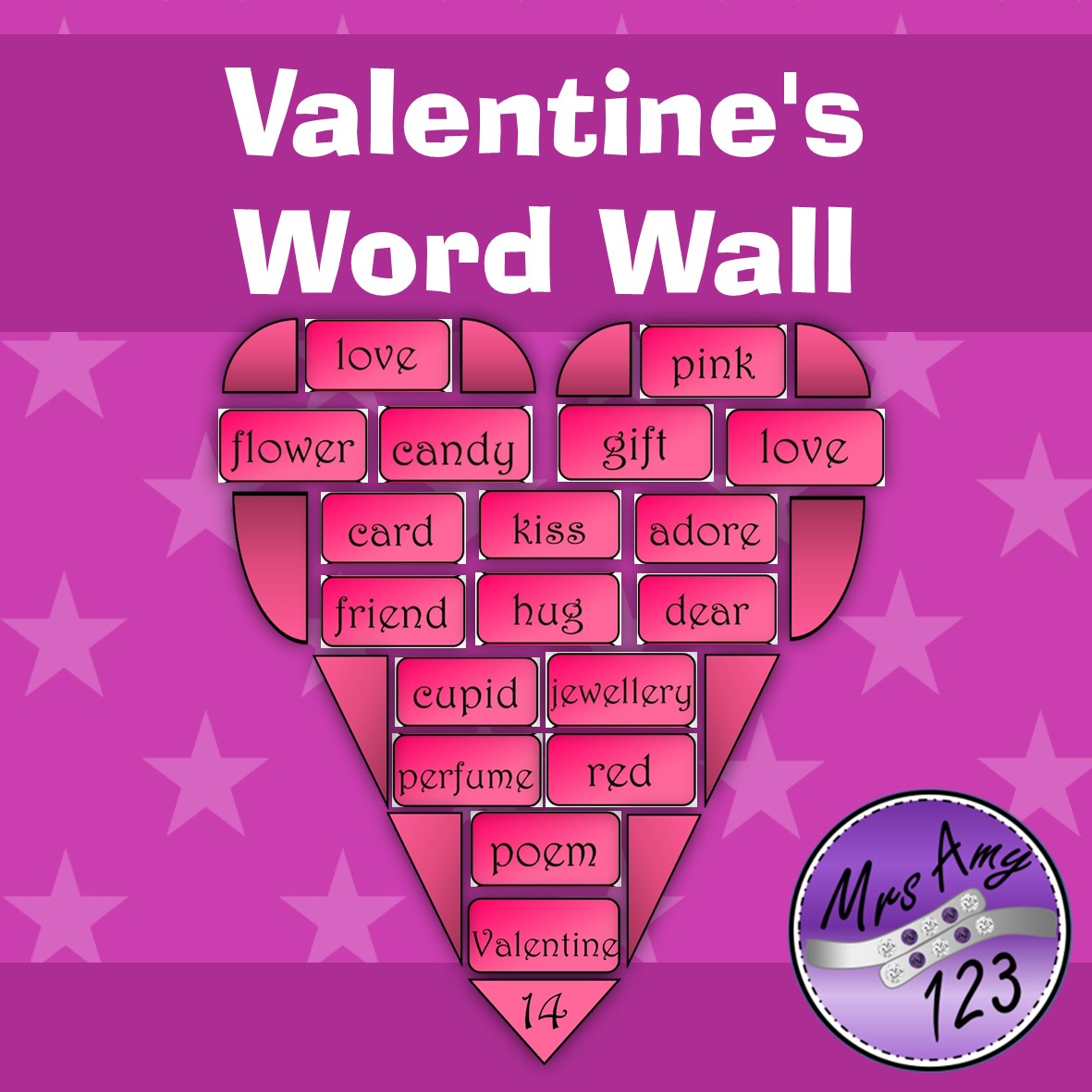
FREE Valentine's Day word wall that makes a heart shape! Available on DBT or TPThttps://www.teacherspayteachers.com/Product/Valentine-Word-Wall-1634903

Friday, 29 January 2016

First Week of School

Take a look into my planning for the first week of school....


When students are first allowed into the room I make sure to take the time to introduce myself to every student. This is an important step to making sure they all feel welcome and it helps them settle faster. Break the stranger barrier before their parents leave. I also introduce myself to the parents and direct them to the instruction sheet I put on every child's desk for what they need to do with their belongings. I found that instructions displayed around the class usually got lost in all the commotion of the room.

Once the bell goes I instruct the students to say good bye to their parents and come to the seating area. I find acknowledging parents in this way makes it clear, in the nicest way possible, that on this occasion they are not invited to stay.

I then tell the students about myself and give them some relate-able facts about me. Give the students a chance to make connections with you and understand you don't live at school! Following this I play a mix of 'get-to-know-you' games in between discussing unspoken classroom rules and procedures. My favourite game to play is 'My name is...' but will be playing it slightly differently next time after reading this blog by Cult of Pedagogy.

Class rules is next on the list and I take all of the students' suggestions, group the similar ones, then scaffold students to frame all the class rules into positive form. You want students remembering what TO DO not what NOT TO DO. The next day I put up the rules up on display. I printed mine on A3 and use them every year as the rules the students come up with are always pretty much the same thing. Once I show them the typed up rules I get them to sign their name in agreement to follow them.
Purchase my class rules here: TPT or DBT

Next we make desk tags. I get them to pick the colour of a half (lengthwise) piece of A4 card. They write their name in large letters in pencil first then once approved they go over it in permanent marker and decorate. This gets laminated that night and on their desk the next morning. It allows them feel like they belong and have ownership over the room.
We then move onto diary writing where I go through how I want them to set up their book in terms of ruling up and date. Make sure to read their diaries as they are writing and ask questions to show you care about them.
For maths we start with Number Crunch then proceed with an about me activity on numbers all about them.


We finish up this section with a fun maths game.

After lunch is usually where I start a fun unit such as health or D&T.
You will notice I don't do any assessments on the first day. This is because most data gathered in the first day is not an accurate representation of students ability. Students need to get back into the swing of things and get their brain juices flowing.
I start reading groups in the first week based on information given by the previous years teacher. These groups get shuffled around as much as necessary in the first few weeks. 
I continue with about me activities throughout the week, start units of work and conduct assessments such as reading, spelling and numbers.
Asking students about their future families is always a great read for parents!


These houses open to reveal pictures of the students family. A great way to you to gain insight to the students home life.


Templates and other about me activities can be found in my About Me Packaged available for purchase on TPT and DBT,

I love teaching graphing and data analysis in the first week as it is another means to get to know students and is an easy concept to cover. I like graphing birthdays and how students get to school. I've included graphing templates, questions and components to make large graphs for display in the About Me Package or they can be purchased separately on TPT or DBT.http://designedbyteachers.com.au/marketplace/class-graphs-great-for-back-to-school/


I hope you have a fantastic week getting to know your class.


Monday, 25 January 2016

Classroom Decoration

I am having great withdrawal symptoms at the moment....from classroom decorating. Every year since I graduated I feel like my classroom has looked better and better. This year, being on maternity leave I have no classroom to decorate.
So while I can't decorate a room of my own I can hopefully pass on some tips to help you decorate yours!

Tip 1: PICK A THEME!
Your theme might be based on colour, texture, topic era or mood. Something simple is often easiest to find items for, A specific theme like pink cowgirl might be a little hard to shop for. Make sure it is engaging and stimulating for the students but not overpowering or distracting. My theme in my classroom is purple with some rainbow thrown in,

Tip 2: CLEAN
I have never got to decorate a classroom that wasn't built after the 1970's with furniture more modern then the late 90's. These older classrooms can always be hard to decorate because no matter what you do they always look old and already have a very haphazard feel to them. The thing that I find makes the biggest difference is giving everything a good clean. Its amazing how fresh somethings can look after a clean....you don't know how many decades its been since they have had a really good scrub! Some schools will also let you paint walls and furniture which can give things a new lease on life. (If you are going to paint I BEG you to pick ONE colour....my last class had 8 different colours and none of them went with each other)
 <---Before
                                                             After--->

Tip 3: COVER UP WALLS WITH PLASTIC TABLE CLOTHES
I love the price, look and ease of table clothes for covering up walls. I find material too heavy to stay up and pin into, crepe paper looks tacky and rips too easily and paper seems to have all the issues of the previous two.
Tip 4: THINK PRACTICALLY
Its safe to say you won't be changing out the things high up on the wall very often so make sure they are items you want to stay up for a long time (if not the whole year). Get your students involved in what goes up and show of their work. Ask yourself what value students will get out of each decoration. A display board with a quote and a cute pictures may look great the first time you look at it but what are the students actually getting out of it? Was it worth the time you took to make it?

Tip 5: DON'T OVERDO IT!
You don't have to fill up every space, or have every decoration you've seen on Pinterest. Keep it simple and de-cluttered.
I loved creating this post and seeing how my class has progressed. The before photos are my first year in that room in 2012 and the afters are from the beginning of 2015. I am so excited to see what I come up with the next time I am back in a room.